Most startups start with simple payroll. A founder or finance manager handles salaries, creates payslips when needed and does compliance tasks later. This approach seems okay at first.
As startups grow, payroll gets more complicated fast.
What starts as a task becomes a big compliance job with PF, ESIC, TDS professional tax, labour rules and employee documents. The real problem is, many businesses realize they need payroll outsourcing services after the issues start affecting work.
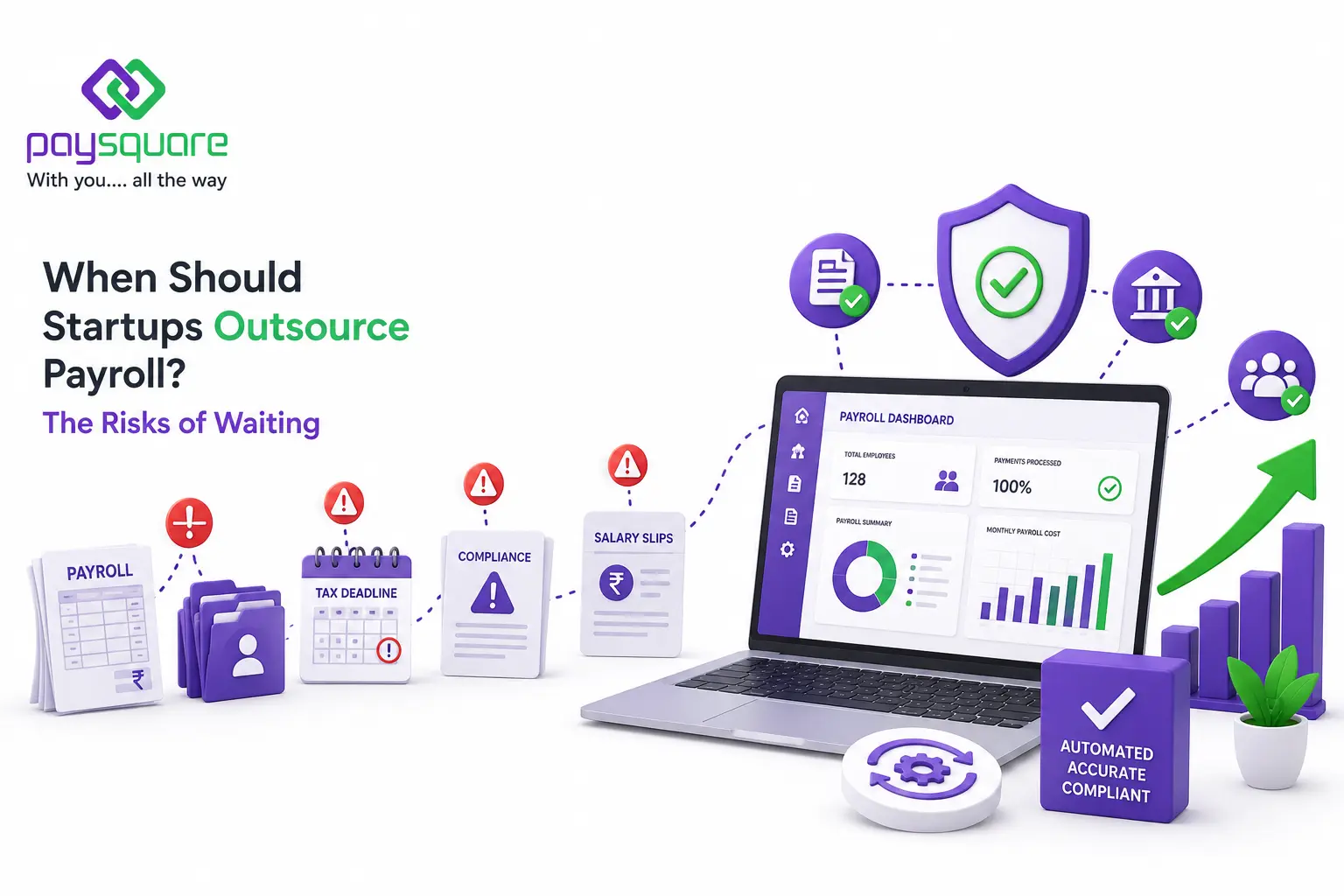
The Signs a Startup Has Outgrown Manual Payroll
Payroll outsourcing delays rarely happen intentionally. In most startups, growth simply happens faster than internal processes can keep up.
There are usually a few clear signs that payroll management is becoming difficult to handle:
- Payroll processing starts taking several days every month
- Statutory filings become delayed or inconsistent
- Employee salary-related queries increase
- Hiring expands across multiple states
- Audit and investor documents become difficult to organise
- HR and finance teams spend too much time resolving payroll issues
At this stage, payroll is no longer just an administrative task. It starts creating compliance and financial risks, making reliable payroll and statutory compliance services essential for growing businesses. Solutions like DeliziaHR can also help organisations streamline HR operations and reduce the burden on internal teams.
Even small payroll mistakes can lead to penalties, delayed filings, incorrect tax calculations, and employee dissatisfaction. Over time, these issues often surface during audits, investor due diligence, or funding rounds, where accuracy and compliance become critical.
When Is the Right Time to Outsource Payroll?
For startups, the ideal time to outsource payroll is earlier than expected. Typically, once the company grows; beyond 10–15 employees or starts hiring in different locations.
At this stage, the payroll complexity increases. Compliance requirements become demanding salary structures change and manual payroll tracking is hard to maintain.
Outsourcing before these challenges become unmanageable helps businesses build systems early. It also allows the founders and teams to focus on growth, hiring and business strategy of administrative work.
Early payroll standardization also improves investor readiness. Organized salary records, tax reporting, and compliance documents create fewer concerns during fundraising or expansion.
What Happens If Businesses Wait Long?
Delaying payroll outsourcing services creates term operational problems that are hard and expensive to fix later.
Compliance gaps accumulate quietly over time. Missed PF registrations, inaccurate TDS deductions, delayed filings or inconsistent employee records may not seem critical initially but they become major issues as the organization continues to grow.
For scale-ups preparing for funding, payroll and compliance processes are reviewed closely. Weak payroll systems raise concerns around governance, financial controls and operational maturity.
There is also an internal cost to consider. HR and finance teams spending much time on payroll have less bandwidth for strategic priorities like workforce planning, hiring and business expansion.
Payroll Outsourcing as a Growth Strategy
As startups transition into scale-ups, payroll management becomes tied to stability and business scalability.
Instead of viewing payroll outsourcing services as a reactive fix, many growing companies treat it as part of building a more structured and scalable business foundation. The earlier this transition happens, the easier it becomes to manage compliance, support expansion and maintain efficiency during rapid growth.